The end matters, but don’t become so focused on getting there that you miss everything happening along the way. Don’t just come to IHPME for the degree. Come for the journey, because the journey is the reward.
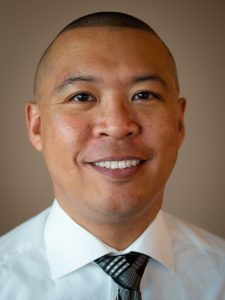
Growing up in Uganda, Emmanuel Naturinda hoped that one day he would become a medical doctor to improve health services and outcomes in his home community of rural Kitagata. He went on to pursue a Bachelor of Science in Clinical/Medical Laboratory Science at the Kwame Nkrumah University of Science and Technology (KNUST) in Kumasi, Ghana. It was at this time that he also trained as a Medical Laboratory Scientist at the Mbarara Regional Referral Hospital in the Western Region of Uganda, where he witnessed firsthand the challenges faced by healthcare providers in remote hospitals, such as outdated paper records, fragmented health data and inefficient workflows, affecting patient care and putting their overall health and wellbeing at risk.
His experiences urged him to consider a different trajectory and focus on improving care at the community level, particularly through digital health innovations such as electronic medical records.
His newfound motivation led him to IHPME, where he enrolled in the Master of Health Informatics (MHI) program with the support of the Mastercard Foundation Scholars Program and Africa Higher Education Health Collaborative (AHEHC).
According to Naturinda, one of the biggest highlights of his studies was the opportunity to learn alongside classmates with diverse cultural, personal and professional experiences, which he says allowed him to learn through meaningful exchanges with his peers.
“Hearing how others understood the same health system challenge often pushed me to question my own assumptions and appreciate that there is rarely one way of looking at a problem in healthcare.”
His time in the MHI program taught him to ask better questions and view complex issues from a “big picture” perspective without getting lost in technical details. This has proven to be particularly valuable in his current work as a Program Coordinator at Queen’s University’s Dunin Deshpande Innovation Centre, where he is regularly tasked with managing multilateral programs involving diverse stakeholders with distinct priorities.
Among the many memorable aspects of the program, Dr. Karim Keshavjee’s Friday lectures left a lasting impression.
“They were thought-provoking and engaging, and I appreciated how they encouraged us to think beyond the technical aspects of health informatics and ask deeper questions about how technology actually shapes healthcare outcomes.”
Beyond the classroom, he found a strong sense of community that became a defining part of his IHPME experience. He recalls special moments, such as nights out with fellow students and the MHI Grad Gala, which provided meaningful opportunities for him and his classmates to pause and celebrate both their collective achievements and the relationships they built along the way.
In his view, the opportunity to learn, grow and celebrate alongside peers is one of the strongest reasons to pursue the program.
“The end matters, but don’t become so focused on getting there that you miss everything happening along the way. Don’t just come to IHPME for the degree. Come for the journey, because the journey is the reward.”
Read More Stories

Meiqi Guo
QIPS provided a good foundation for my QI career and gave me the credibility and connections to grow. After completing CQuIPS’ Certificate Course for Quality Improvement and Patient Safety, Dr. Meiqi Guo decided to further her understanding of QIPS by […]

Shaurya Taran
The CEHCR program […] shifted my perspective from focusing solely on individual patients to thinking about populations and systems. When Dr. Shaurya Taran decided to pursue his PhD in Clinical Epidemiology and Health Care Research (CEHCR), he was motivated by […]

Mohammad Refaei
The experience can be transformative. And the impact of what you build during your time at IHPME can extend far beyond graduation. Driven by a desire to turn a personal passion for improving patient safety into real-world impact, particularly in the […]

Maha Al Mandhari
IHPME is an incredible place to grow. You gain practical tools, supportive mentors, and a community that stays with you long after graduation. Motivated by a desire to leave a lasting impact, Maha Al Mandhari began her studies in the […]

Victoria Boyd
Learn more about Victoria Boyd’s transformative journey through the HPER program at IHPME, which ignited her passion for health professions education research.

Anam Shahil-Feroz
Before, I used to focus only on the small tasks of each project, but this journey has helped me realize the importance of seeing how every step in a project contributes to a larger impact. During her nursing career, Dr. […]