Talk Title: Policy Questions, Messy Data: Three approaches to turning messy data into information for public policy
Abstract:
This talk describes 3 projects demonstrating the development of statistical methods to use messy data on people to draw conclusions for public health or policy. It concludes with some comments on the contribution of statistics to such settings.
For the first part consider: How do you sample populations such as people who inject drugs? You find a few, then get them to recruit their friends. But how do you make inference from the resulting sample? Respondent-Driven Sampling attempts to allow for statistical inference in this challenging data setting. In particular, we address the question of how to cluster the network tree-structured data collected using RDS based on covariates and partial network observation.
In the second part, we address the challenge of estimating the number of killings in the Syrian conflict. The challenge would be easy if there were a list of killings, and several groups are working on creating such lists. Unfortunately, none of the lists are complete. We introduce a method to use hierarchical clustering to characterize the partial overlap between 4 separately-collected lists of killings to estimate the total killings. This is an extension of the classical capture-recapture or multiple systems estimation methods.
Finally, we discuss a difficult issue in analysis of network data: In many cases, networks are undirected (if I had lunch with you, you also had lunch with me), but two parties reporting on the same relation may give conflicting reports. We address this problem in the context of a longitudinal study of (several types of) social relations and health behaviors among middle school students. Leveraging the multiple networks observed for each student, we estimate the false reporting rates of each student to infer the true network structure.
Register here: https://
Related Events
Trust and Trends in Medical Publishing
Jul
24
Jul 24, 2025 from 2pm-4pm (EDT)
Schwartz Reisman Innovation Campus
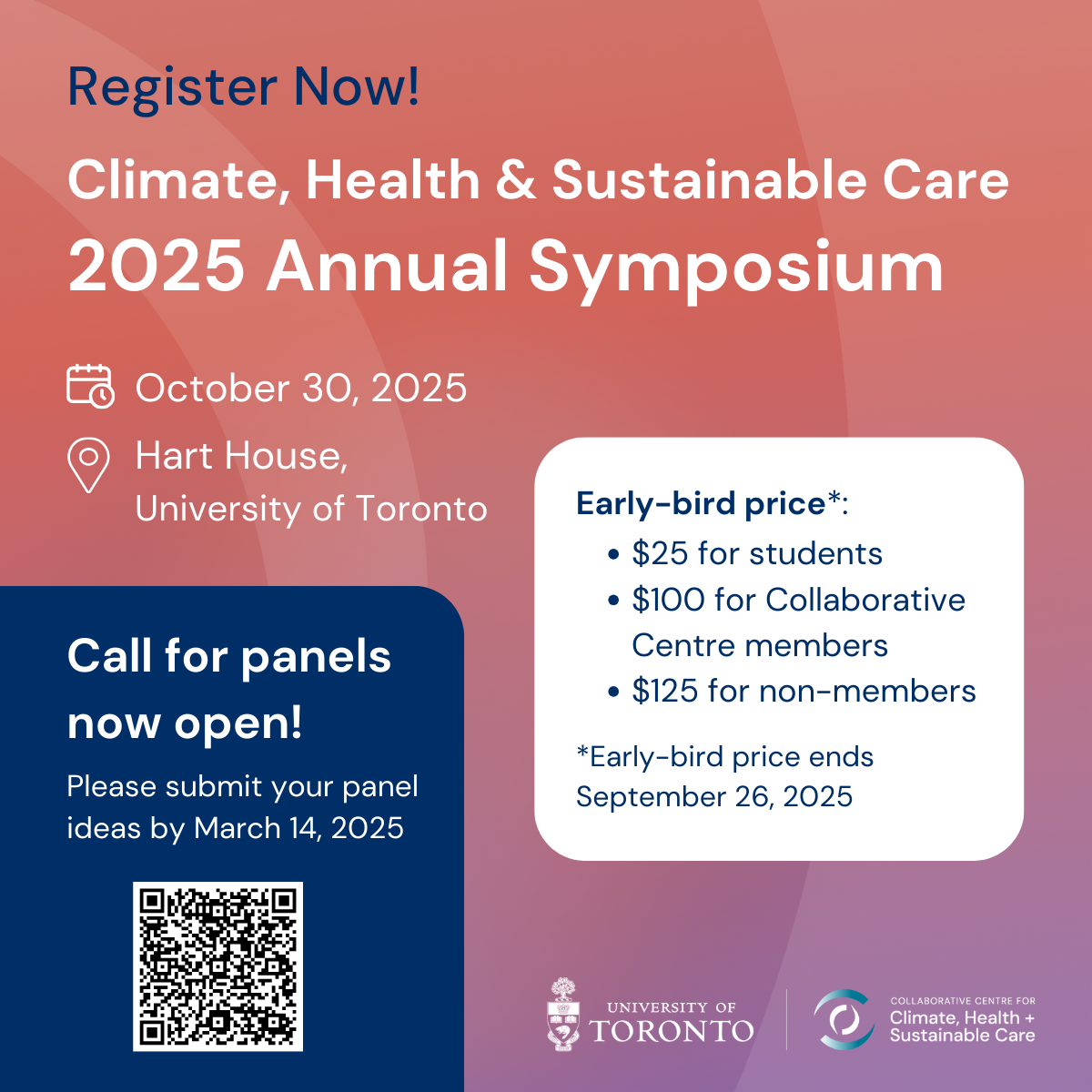
Climate, Health & Sustainable Care 2025 Annual Symposium
Oct
30
Oct 30, 2025 from 9am-5pm (EDT)
Hart House, University of Toronto

Sign up for IHPME Connect.
Keep up to date with IHPME’s News & Research, Events & Program, Recognition, e-newsletter.
Subscribe to Connect Newsletter
Get in Contact
Communications
Marielle Boutin
Email Address: ihpme.communications@utoronto.ca